Showing posts with label Romance of the Three Kingdoms. Show all posts

Monday, October 27, 2008

Romance of the Three Kingdoms - Part X


The Battle of Yijing: 關門捉賊 Encircle and Capture

After the Battle of Jieqiao, Warlords Yuan Shao and Gongsun Zan continued to fight to gain dominion over Northern China. Eventually Yuan Shao gained the upper hand. However, Gongsun Zan still had a large army which would pose a constant threat to Yuan Shao. The time had come for a climatic battle and decisive encounter between the two rivals.

Battle of Yijing (Source: Wikipedia)

The Time: AD199
The Place: Yijing, Hebei
The Rivals: Yuan Shao vs. Gongsun Zan

After a series of military setbacks, Gongsun Zan was in dire straits. Further, a famine had occurred in his lands. He decided that it was too risky to engage Yuan Shao’s force head on due to the latter’s numerical superiority.

He decided instead to build a large capital city, Yijing. This city comprised of many large towers on top of mounds, where he and his generals lived. Altogether, there were ten mounds around the city barred with iron doors and supplied with huge grain supplies. With this, Gongsun Zan felt that he would be able to withstand any possible siege by his nemesis, Yuan Shao.

Gongsun Zan left his frontier armies and soldiers on their own believing that they would fight harder as they had no other option other than to oppose Yuan Shao. Instead, most of his soldiers either surrendered or fled.

Stratagem: 關門捉賊 Encircle and Capture
In AD198, Yuan Shao’s forces invaded Gongsun Zan’s territory and defeated his garrisons. His armies reached the gates of Yijing, but the city withstood several attacks from the Yuan Shao’s army.

Spring AD199: Gongsun Xu and Zhang Yan brought relief to Yijing with 100,000 men. Before they arrived, Gongsun Zan had sent a message to his son telling him to lay an ambush of 5,000 elite cavalry on low ground north of the city. They were then to signal Gongsun Zan to charge out of the city with his troops, planning to surround Yuan Shao's troops.

However, Yuan Shao's troops caught the messenger and laid their own troops in ambush. Yuan Shao’s forces then fooled Gongsun Zan into attacking and routed his unit and forced him back into the city.

Yuan Shao's troops followed up their success by digging tunnels under the city and then supporting them with beams which they later torched. The tunnel went into the center of the city and its collapse caused Zan's towers to crumble as well.

Realizing his doom, Gongsun Zan killed his sisters and wives and committed suicide by self-immolation. Yuan Shao's men climbed into the citadel and cut off Gongsun Zan's head, which was sent to Xu Chang to report Yuan Shao's victory to the imperial court.

Conclusion:
With Gongsun Zan’s defeat, Yuan Shao now held absolute power over the four provinces north of the Yellow River. This would set the scene for the battle between the two Northern Dragons, Warlords, Yuan Shao and Cao Cao. The fate of all of Northern China and Han Dynasty now laid with them.

Monday, October 20, 2008

Romance of the Three Kingdoms - Part IX


The Battle of Jieqiao: 瞞天過海 Deceive the Heavens to Cross the Ocean


It was the year AD200. With a massive 100,000 infantry and over 10,000 cavalry,
Yuan Shao commanded the largest military force in all of China at this time. Flanked with valiant warriors including Wen Chou and Yan Liang and able strategists such as Tian Feng and Ju Shou, his forces appeared unstoppable. Further, he was in possession of vast provinces in Northern China including Jizhou, Qingzhou, Youzhou, and Bingzhou.

The Grand Administrator of Bohai
Who was Yuan Shao? In this post we shall trace his roots and his rise to power in Northern China.

Prior to the fall of the Han Empire, the Yuan family had held the highest offices of state for generations and their network of allies and clients extended across the empire. Thus, Yuan Shao held immense authority and prestige.

As the leader of the
Guandong Coalition, Yuan Shao commanded the most famous warlords of his time. Unfortunately, due to bickering and squabbling between the various factions, the Coalition failed in their attempt to defeat Dong Zhuo and restore the Han Empire.

Battle of Jieqiao (Source:
Wikipedia)

The Time: AD191
The Place: Jieqiao
The Rivals: Yuan Shao vs. Gongsun Zan

With the Coalition in tatters, Yuan Shao retreated back to his city at Ye and began building a warlord state. In AD191, Han Fu, the Governor of Ji province surrendered his governorship to Yuan Shao in light of an imminent attack by Gongsun Zan from the North. In the winter of that year, the two forces met at the Jieqiao. It was at this battle that Yuan Shao laid the foundations of his kingdom.

Yuan Shao himself came in force and the two sides met 40km south of Jie Bridge, a crossing on the Qing River. Gongsun Zan's army had a reported strength of 40,000, consisting of 30,000 infantry and 10,000 calvalry. He arrayed his infantry in a square and divided his cavalry between the left and right wings. In the centre were placed his elite Baima Calvalry which formed the core of his fighting force.

Though Yuan Shao's army was of comparable size, it consisted almost entirely of infantry. His commander Qu Yi was placed at the van with 800 elite troops and 1,000 crossbowmen. Behind them stood masses of footsoldiers, numbering in the tens of thousands, commanded by Yuan Shao himself.

Stratagem: 瞞天過海 Deceive the Heavens to Cross the Ocean
Yuan Shao realized that the Gongsun Zan’s forces were overly dependent on its’ elite Baima Calvalry ‘whose flags and armour lit up Heaven and Earth’. If this elite unit could be defeated, Gongsun Zan’s forces would be demoralized and unable to withstand a counterattack by Yuan Shao’s infantry.

Yuan Shao then purposely misled Gongsun Zan into believing that his vanguard was thinly spread. As an experienced horseman, Gongsun Zan ordered a charge by his cavalry expecting to break the enemy line and destroy the core of Yuan Shao’s army forcing them to retreat.

However, Yuan Shao’s men were well prepared. His infantry formed a shield wall and awaited the onslaught. When Gongsun Zan's cavalry was a mere ten paces away, the crossbowmen loosed waves of bolts, followed by the footsoldiers, who rose with their spears. After a general melée the front of Yuan Shao's line was littered with cut down horses and Gongsun Zan's dead.

The Gongsun commander, Yan Gang was killed in the fighting. Yuan Shao's army is said to have taken 1,000 heads. Having failed to breach the Yuan line, the Gongsun cavalry wheeled around and fled from the battle, followed by the infantry.

Gongsun Zan attempted to regroup and hold the line of the Qing River. His rearguard clashed with Yuan Shao’s forces at Jie Bridge but was defeated. The abandoned Gongsun camp was quickly overrun.

Conclusion:
The Battle of Jieqiao halted the southern advance of Gongsun Zan but it was by no means decisive in the protracted struggle between Gongsun Zan and Yuan Shao. These two rivals would meet once again in AD199 at Yijing for a final decisive encounter.

Wednesday, July 16, 2008

Romance of the Three Kingdoms - Red Cliff (John Woo)

Interlude: Red Cliff (John Woo film)


For those of you that are interested in my Romance of the Three Kingdoms posts, the Battle of Red Cliff, has been fleshed out in reel life by John Woo. Part 1 of 2 is now showing in cinemas right now, so if you find my posts interesting, you should definitely check the movie out.

Red Cliff, is a Chinese epic film based on the Battle of Red Cliff
and events during the Three Kingdoms period in Ancient China. The film is expected to be released in two versions: within Asia, Red Cliff is to be released in two parts totaling over four hours in length, with the first part premiering in July 2008 and the second in January 2009.

The film is directed by
John Woo and stars Tony Leung Chiu-Wai, Takeshi Kaneshiro, Zhang Fengyi, Chang Chen, Hu Jun, Lin Chi-ling and Zhao Wei. With an estimated budget of US$80 million, Red Cliff is the most expensive Asian-financed film to date.

This film is based largely on the 'Chronicle of the Three Kingdoms', which is more historically correct. Hence, both Cao Cao and Zhou Yu are given fairer treatment in the movie than in the fictionalised account in the novel 'Romance of the Three Kingdoms'.

The Antagonist: Prime Minister of Han, Cao Cao
The regal looking Cao Cao, Prime Minister of the Han Empire. A magnificent general, leading over 240,000 men to subdue the Southern Rebels. How could he lose? In the movie, Cao Cao was potrayed as desiring to possess the beautiful Xiao Qiao. Bah humbug! A great leader drooling over a mere woman?


The Most Beautiful Woman in China: Xiao Qiao
Is Xiao Qiao a ravishing beauty, enough to move your heart and set your mind ablaze with desire?


The Protagonists: Charismatic Liu Bei and Brave Sun Quan

Liu Bei, famous for his charisma, together with sworn brothers Guan Yu and Zhang Fei understands that this is their last stand. Should the Alliance fall here, all would be lost.

Sun Quan, bold beyond belief, daring to challenge the might of the Han Prime Minister. Only 50,000 brave marines stand against the might of 240,000 Cao Cao's valiant warriors.


Orchestrator of the Symphony of Stratagems: Maestro Zhou Yu

Given great prominence in the movie is non other than Maestro Zhou Yu. Not surprising since he was the mastermind behind the 連環計 Symphony of Stratagems at Red Cliff.


Sleeping Dragon: Master Strategist, Zhuge Liang

Zhuge Liang looks dashing here in his Taoist robes. The movie hints at the rivalry between the two master strategists, at latter date, as they serve rival warlords.

Conclusion:
So, what more can you ask for? Go watch it and post your comments here on how you feel about the movie!

Monday, June 30, 2008

Romance of the Three Kingdoms – Part VIII

Interlude

The Battle of Red Cliff, End Game: 連環計 Symphony of Stratagems

Three Rulers vying for supremacy,
Three Factions struggling for survival,
Three Stratagems forged in concert,
Threads of destinies, woven together,
Thus, was laid the foundation of the Three Kingdoms.


Prologue
In 208 AD during the Northern Winter, Cao Cao led his army numbering 240,000 against Southern China. Fresh from the euphoria of a highly successful Northern Campaign, vanquishing enemies such as Lu Bu, Yuan Shao, Yuan Shu and Liu Biao, the Imperial Chancellor of Han seemed unstoppable.

The southern Alliance of Sun Quan and Liu Bei had a mere 50,000 marines at their disposal. Being outnumbered numerically almost 5 to 1, many counseled the Alliance to formally surrender to Emperor Xian and Cao Cao, the Imperial Chancellor of Han. However, warlords Liu Bei and Sun Quan were adamant in opposing Cao Cao. The final line of defense for the Alliance was the Yangtze River.


The Decisive Encounter
After the initial skirmishes, the final decisive encounter between the two forces would take place on the Wulin battlefields on the northwestern bank of the Yangtze. During this pivotal encounter, the commander of the Alliance’s Forces, Maestro Zhou Yu unleashed his 連環計 Symphony of Stratagems on Cao Cao’s massive fleet.

1. Alpha Stratagem: 苦肉計 Gain a rival’s trust through self-mutilation
At the Wulin battlefields, Cao Cao’s gargantuan fleet was positioned at the northern banks. Zhou Yu waited patiently; biding his time until the southeastern wind was blowing strongly. He then instructed Huang Gai to send a messenger to Cao Cao bearing the message below:

"Zhou Yu has kept such strict watch that there has been no chance of escape. But now some grain is coming down river, and I, Huang Gai, have been named as escort commander which will give me the opportunity I desire. I will slay one of the known generals and bring his head as an offering when I come. This evening at the third watch, if boats are seen with dragon toothed flags, they will be the grain boats."

Cao Cao’s was delighted at Huang Gai’s purported defection and relaxed his guard. Shortly thereafter, Huang Gai prepared a squadron
of capital ships described as mengchong doujian 蒙衝鬥艦. These ships had been converted into fire ships by filling them with bundles of kindling, dry reeds, and fatty oil. As Huang Gai's "defecting" squadron approached the midpoint of the river, the sailors applied fire to the ships and escaped to small boats. The unmanned fire ships, carried by the southeastern wind, sped towards Cao Cao's fleet and set it ablaze.

2. Zeta Stratagem: 借刀殺人 Yin overwhelms Yang
Despite the strategic acumen displayed by Cao Cao in his Northern Campaign, he was led astray by the beguiling words of Young Phoenix. Cao Cao was so enamored with the idea of removing the seasickness from his army and re-establishing his infantry and cavalry’s fighting prowess that he was oblivious to the risk of a fire attack by the Alliance.

Since Cao Cao’s immense navy was gathered tightly and chained firmly together, it was impossible for his ships to scatter and flee from the fire. Following the initial shock, Zhou Yu and the allies led a lightly armed force to capitalize on the assault. Within a short time smoke and flames stretched across the sky and a large number of men and horses either burned to death or drowned. The northern army was thrown into confusion and was utterly smashed. Seeing the situation was hopeless, Cao Cao then issued a general order of retreat and destroyed a number of his remaining ships before withdrawing

3. Omega Stratagem: 關門捉賊 Encircle and Capture
Cao Cao’s retreat towards Jiangling was beset with numerous setbacks as Zhuge Liang had divined Cao Cao’s exact line of retreat, based on his understanding of Cao Cao’s psychological make up. The numerous ambushes and attacks on Cao Cao’s forces during their retreat towards the city of Jiangling decimated the remnants of his army.

Due to his extremely suspicious nature, Cao Cao was misled into leading his men towards the Huarong Trail, where Guan Yu and his men lay waiting. Cao Cao’s forces was ambushed by Guan Yu. They were in a pitiful state and were in no condition to resist Guan Yu. The Symphony of Stratagems was concluded.


人算不如天算 Man Proposes: God Disposes
Guan Yu's success in capturing Cao Cao, would have led to the eventual demise of the Northern Wei kingdom. Even though there were numerous capable leaders in Wei, these generals were loyal only to Cao Cao. His capture or death would lead to the Wei Kingdom disintegrating into various factions, since Cao Cao had no apprarent heir at this point in time.

Unfortunately for the Alliance, Guan Yu had been captured by Cao Cao in the past. At that time, he had agreed to serve Cao Cao, subject to three conditions: that his surrender was to the Han emperor and not Cao Cao; that the two wives of Liu Bei were to be suitably provided for and protected; and that all three would leave to seek Liu Bei once they found out his whereabouts. These conditions were agreed to and Guan Yu surrendered without breaking the code of loyalty. Guan Yu had subsequently left Cao Cao, upon discovering the whereabouts of Liu Bei.

Guan Yu, being the paragon of virtue,could not forget the great kindness he had received at Cao Cao's hands, and the magnanimity Cao Cao had shown to him in the past. He saw the desperate straits to which his benefactor was reduced, and tears were very near to the eyes of both. He could not press Cao Cao hard and was moved to release him. Thus, the proverb: 人算不如天算 Man Proposes: God Disposes.

Epilogue
By the end of AD209, the Cao Cao’s fort established at Jiangling fell to Zhou Yu. The borders of the land under Cao Cao's control contracted about to the area around Xiangyang. Liu Bei, on the other hand, had gained territory by taking over the four commanderies south of the Yangtze River. Never again would Cao Cao command so large a fleet as he had at Jiangling, nor would a similar opportunity to destroy his southern rivals present itself again. The Battle of Red Cliff and the capture of Jing province by Liu Bei confirmed the separation of Southern China from the northern heartland of the Yellow River valley, and also foreshadowed a north-south axis of hostility which would resonate for centuries (de Crespigny).


Monday, June 23, 2008

Romance of the Three Kingdoms – Part VII

Interlude

The Battle of Red Cliff, Final Link: 關門捉賊 Encircle and Capture

With the first two stratagems chained, the stage was set for a potentially explosive battle between the two forces. The Alliance were confident of Cao Cao’s eventual defeat as he had fallen prey to their earlier stratagems. Yet, the Alliance led by Zhou Yu and aided by Zhuge Liang had the foresight to realize that, even if Cao Cao suffered massive losses and casualties at the Battle of Red Cliffs, he would still post a huge threat the Alliance at a later date, if he managed to escape. Cao Cao’s northern empire was immense and he had numerous reserve infantry and cavalry at his disposal.

Armed with such foresight, the Alliance forged the final link in the Symphony of Stratagems: 關門捉賊 Encircle and Capture Stratagem. This stratagem was to be employed at the End Game. If Cao Cao suffered a decisive loss, his most obvious line of retreat would be to escape northwards towards the city of Jiangling.

Foreseeing this, Zhuge Liang had dispatched several of Shu’s best generals including Zhao Yun, Zhang Fei, Liu Qi and Guan Yu stationed at various paths along the route northwards to Jiangling. Zhuge Liang was able to foreshadow Cao Cao’s exact line of retreat, based on his understanding of Cao Cao’s frame of mind.

Based on Zhuge Liang’s calculations, numerous ambushes were placed along the route northwards, intended to whittle down Cao Cao's forces, leading to his eventual capture. Under Zhuge Liang’s instructions, Guan Yu prepared an ambush by stationing 500 men along the Huarong Trail, a narrow shortcut in the woods leading towards Jiangling. Guan Yu was directed to also set off columns of smoke along the Huarong Trail.

If Cao Cao was defeated at the Battle of Red Cliff, his eventual retreat northwards would lead him across two possible paths towards Jiangling:

1. A high road, more level but fifteen miles longer; or
2. A shorter by-road leading towards Huarong Valley. This road was narrow and dangerous, full of pits and difficult to traverse. In short, an ambush could easily be set along the Huarong Trail.

Cao Cao’s scouts reported that there were columns of smoke rising from the hills along the Huarong Valley. Zhuge Liang’s complete understanding of Cao Cao’s psychological make-up was evident in his directions to Guan Yu.

Due to his extremely suspicious nature, Cao Cao was likely to be misled into concluding that the smoke was a trick of the enemy to divert him to the main road, where an ambush must have been laid. He would then decide to lead his men towards the narrower path, the Huarong Trail, where Guan Yu and his men lay waiting. The remnants of his forces, likely to be tired from being constantly attacked would be in no condition to resist Guan Yu's ambush. Cao Cao’s fate would now lay in the hands of Guan Yu.

Conclusion:
If the Symphony of Stratagems were correctly chained and executed, not only would the Alliance win a resounding victory at the Battle of Red Cliff but they would successfully eliminate the primary antagonist facing the Alliance. Would the Alliance’s chain stratagems work? Watch out for my next post.

Monday, June 16, 2008

Romance of the Three Kingdoms - Part VI

Interlude

The Battle of Red Cliff, Successive Subterfuge: 借刀殺人 Yin overwhelms Yang

The Alliance had successfully deployed the 苦肉計 earlier. The time had come for the Alliance to now to chain this to the 借刀殺人 stratagem. A literal translation of this ruse is Kill with a borrowed knife. In my opinion, this stratagem is better described as the Yin overwhelms Yang ruse. When the situation is not favorable, one should not meet the enemy head on. Instead, one should seek to use the strength of another, or even the enemy’s own strength, against him.

With Cao Cao’s naval base established, daily drills were carried out to convert his vast infantry and cavalry, into a marine corps. It would only be matter of time before this vast army was ready to meet the Alliance in a decisive naval battle.

How could the Alliance defeat Cao Cao’s army? A successful defense would require an ingenious use of the 借刀殺人 stratagem, using Cao Cao’s own strength against him. Clearly, the strength of Cao Cao’s army lied with their extensive experience in land warfare. Their weakness was equally apparent; the alien surroundings, unfamiliarity with naval warfare and seasickness suffered by his troops.

If Cao Cao were presented with a plan that would eliminate his army’s seasickness and play to his strengths, could he refuse? With such a plan and his overwhelming numerical superiority, his army’s strength would be irresistible!

A person of immense intellect and cunning would have to be sent to convince Cao Cao fall prey to this stratagem employed by the Alliance. Young Phoenix: Pang Tong, currently serving the warlord Sun Quan, was sent to achieve this difficult task.

Through an intermediary, Pang Tong agreed to defect from the Alliance and was formally introduced to Cao Cao. They discussed military matters, and Pang Tong held forth at length. Remarks and comments flowed freely between the two, and Cao Cao formed an exalted opinion of his new adherent's abilities and treated him with the greatest honor.

Pang Tong then suggested the following to Cao Cao to rid his men of seasickness during the upcoming decisive naval encounter with the Alliance:

"The river is wide, and the tides ebb and flow. The winds and waves are never at rest. Your troops from the north are unused to ships, and the motion makes them ill. If your ships, large and small, were classed and divided into thirties, or fifties, and joined up stem to stem by iron chains and boards spread across them, to say nothing of soldiers being able to pass from one to the next, even horses could move about on them. If this were done, then there would be no fear of the wind and the waves and the rising and falling tides."

How could Cao Cao resist this alluring plan? 借刀殺人 stratagem was employed by Pang Tong to perfection. Ostensibly, this plan would play to Cao Cao strengths and allow him to defeat the Alliance. Yet, this scheme would also render Cao Cao’s naval army to be dreadfully susceptible to a fire attack. Cao Cao was so enamored by the allure of removing the seasickness from his army that he threw caution to the wind and embraced Pang Tong’s plan.

Conclusion:
The Alliance has successfully chained the 苦肉計 stratagem to the 借刀殺人 ruse. If the final stratagem was successfully employed, the stage would be set for an overwhelming victory for an Alliance. Would Cao Cao fall under the spell of the Symphony of Stratagems strung by Maestro Zhou Yu? We shall see.

Saturday, June 7, 2008

Romance of the Three Kingdoms - Part V

Interlude


The Battle of Red Cliff, Ensuing Ruse: 苦肉計 Gain a rival’s trust through self-mutilation

Despite Zhuge Liang’s earlier success in obtaining 100,000 arrows, a direct encounter between the Alliace with Cao Cao’s gargantuan fleet would still result in certain defeat for the former. The only viable strategy that could decimate Cao Cao’s forces with minimal losses would be to use a fire attack. Further, they would need to convince Cao Cao to chain his ships together so that massive damage and casualties could be inflicted on Cao Cao’s fleet by fire. To succeed, Cao Cao has to be swayed into making several fatal strategic missteps. I shall refer to this overall strategy as the 連環計 Symphony of Stratagems.

The problem was simple: How could this be done? The first piece of the puzzle:

Stratagem: 苦肉計 Gain a rival’s trust through self-mutilation

The only possible course open to the Alliance would be to convince Cao Cao to accept a *traitor* from the Alliance. This *traitor* would pretend to defect during the decisive engagement between Cao Cao and the Alliance. At an opportune moment, the *traitor* would launch a fire attack on Cao Cao’s forces throwing them into disarray.

By this time, Cao Cao was already an experienced general, whose strategic and tactical prowess was unquestioned. To convince him to accept any defectors from the Alliance, would require a high degree of subterfuge and corroborating evidence. Thus, the commanding officer of the Alliance, Zhou Yu decided on the 苦肉計 stratagem.

Huang Gai, a trusted general of the Wu Kingdom valiantly accepted the role of the *traitor*. In order to successfully feign desertion, he openly voiced his dissent against opposing Cao Cao, during a meeting between the Alliance’s commanding officers. Zhou Yu pretended to be furious at his lack of loyalty to the Wu Kingdom and sentenced him to be whipped 50 times. After the punishment, Huang Gai was in a deplorable state. His back was cut in many places, and the blood was flowing in streams.

News of Zhou Yu’s treatment of Huang Gai filtered back to Cao Cao. Through the use of a messenger, Cao Cao received Huang Gai’s letter offering to defect during the forthcoming decisive naval encounter between the opposing forces. Cao Cao had doubts as to whether the defection was genuine. However, Zhou Yu’s ingenious use of the 苦肉計 stratagem allayed his fears and concerns.

The first part of the Symphony of Stratagems has been set. We shall look at how other pieces of this grand strategy were put in place. The success or failure this stratagem, would determine the outcome of this decisive battle.

Conclusion:
To first convince a rival to accept a turncoat from your faction, physical or mental self mutilation of your subordinate, at your hands, is necessary. This should suffice to allay any doubts or concerns by your rival, as to whether the defection is bona fide or otherwise. Simlarly, you should always be wary of renegades from the opposing camp, even those that have suffered horrendous mutilations at the hands of your rival, lest you fall foul of the 苦肉計 stratagem.

Monday, June 2, 2008

Romance of the Three Kingdoms – Part IV

Interlude

The Battle of Red Cliffs, First Strike: 無中生有 Weaving Reality from Illusion

The Alliance of Sun Quan and Liu Bei were on perilous ground as they attempted to oppose the mighty hordes of Cao Cao. An analysis of Cao Cao’s army revealed that they were composed mainly of infantry and cavalry, with minimal experience in naval warfare. If the Alliance were to stand any chance of defending their homeland, they had to prevent Cao Cao’s army from crossing the Yangtze River. A decisive naval battle would have to be fought to determine the fate of China.

Although the Alliance’s 50,000 marines were highly experienced in naval warfare, the speed of Cao Cao’s southern campaign had taken them by surprise. In a naval battle, arrows were the most effective weapons. The Alliance would be able to decimate the hordes of Cao Cao without suffering any significant casualties in turn. However, they faced a significant problem.

Sun Quan and Liu Bei did not have sufficient arrows in their armories to supply the marines for such a decisive naval campaign. Without these armaments, no effective defense could be mounted against Cao Cao and eventual defeat was certain.

How many arrows would be required by the Alliance to supply their armies? 100,000 arrows!

How soon would they require them? 3 days!

Zhuge Liang was assigned this Herculean task to complete. Even though he was a master strategist, even he may have stretched himself too far. It would be impossible for the Alliance’s armories to build such a large number of arrows in such a short period. These arrows must obviously have to be already in existence. To borrow or obtain arrows from other neighboring states would take longer than three days.

There was only one source of arrows available –
from Cao Cao himself!

Stratagem: 無中生有 Weaving Reality from Illusion

In order to convince Cao Cao to *donate* arrows to the Alliance, Zhuge Liang had weave reality from illusion. How could he possibly do this?

The Illusion
He fashioned the illusion of a vast naval army by using twenty vessels each manned by thirty people. On each boat, he had cotton screens and bundles of straw lashed on the sides of the boats. Zhuge Liang waited until a night where it was very foggy and the river was dense with mist until one person could scarcely see one another.

As Cao Cao’s naval army was inexperienced and in a hostile environment, Zhuge Liang was certain that Cao Cao would not venture out of his camp at night to meet the Alliance’s naval army under such foggy and misty conditions. Knowing this, he instructed his vessels to form a straight line facing Cao Cao’s naval camp. Zhuge Liang’s marines then made a brouhaha that misled Cao Cao into thinking that the Alliance army had prepared an ambush and was goading them into attacking.

The Reality
Cao Cao then dispatched thousands of archers and crossbowmen lined up at the edge of his naval base to shoot at the bank to prevent any landings by the Alliance’s Navy. Arrows landed like rains that night hitting Zhuge Liang’s vessels until dawn. By then, the fog had dispersed and the twenty vessels commandeered by Zhuge Liang were bristling with arrows on both sides, sailing away too fast for Cao Cao's navy to give chase.

Conclusion:
Using a cunning ruse, Zhuge Liang profited by 100,000 arrows whilst simultaneously depleting Cao Cao’s armories. Zhuge Liang deceived Cao Cao into surmising that the Alliance’s Navy was attacking his Cao Cao, when in reality – there was nothing there!

Friday, May 30, 2008

Romance of the Three Kingdoms – Part III

Interlude

The Battle of Red Cliff 赤壁之戰


Following Wang Yun’s successful 美人計 No Man May Pass the Hall of Beauties strategem, the irresistible synergistic combination of Dong Zhuo and Lu Bu was torn asunder. Dong Zhuo’s death at the hands of Lu Bu and his conspirators, led to a civil war within Dong Zhuo’s faction. The resulting power vacuum within the Han capital was quickly seized by Cao Cao, who took control of the Han Capital and proclaimed himself as Imperial Chancellor of Han, bestowing upon him immeasurable power over the remnants of the Imperial Han Government.

Within a span of less than a decade after taking control of the Han Capital, Cao Cao successfully unified northern China by vanquishing enemies including Lu Bu, Yuan Shao, Yuan Shu and Liu Biao. Cao Cao then turned his ambitions towards Southern China in his attempt to reunite China with infantry numbering approximately 240,000 men.

However, he faced two main nemesis in his attempts to conquer Southern China.

The warlord Sun Quan controlled the river east of the Yangtze river and the southeastern territories abutting it. He assigned his most able commanders including Zhou Yu, Cheng Pu and Lu Su to command 30,000 seasoned marines to meet Cao Cao’s hordes.

Liu Bei, now based Xiakou sealed an alliance with Sun Quan and sent 20,000 marines, led by Zhuge Liang to combine with Sun Quan’s army. The alliance of Sun Quan and Liu Bei had 50,000 men against the 240,000 led by Cao Cao.

So, the stage was set for the Battle of Red Cliff. And what was at stake?

For Cao Cao, success would mean he would be able to reunite the whole of China and eliminate his two main rivals before they became entrenched in their respective positions. If successful, Cao Cao and his descendants would be able to re-establish the Han Dynasty or dethrone the Han Rulers and place himself and his future successors as the emperors of China.

If Sun Quan and Liu Bei were successful, they would maintain control over the Yangtze river. This would provide a natural line of defense that would give them time to consolidate their respective territories. Thus, they would be able to prevent or prolong the period taken by the Wei Kingdom, led by Cao Cao to reunite China.

With a numerical superiority of almost 5:1, seasoned infantry, capable military commanders and fresh from the euphoria of a highly successful northern campaign, Cao Cao possessed immense advantages. Further, he had the moral and legal right to assume control over Southern China as he was the current Imperial Chancellor of Han.

Could the alliance of Sun Quan and Liu Bei resist the overpowering northern army of the Wei Kingdom led by Cao Cao? Or would Cao Cao reign victorious? We shall see how this decisive battle unfolds, in future posts.

Monday, May 19, 2008

Romance of the Three Kingdoms - Part II

Interlude

美人計 No Man May Pass the Hall of Beauties

In Ancient China, the seeds of the destruction of the Han Empire were sown due to the neglect and ineptitude of the latter Han Rulers. During the chaotic times, the warlord Dong Zhuo managed to seize control of the Han Capital, Luo Yang and install Emperor Xian as his puppet figurehead.

Dong Zhuo was a tyrannical megalomaniac and put many loyal and noble officials to their deaths. Although several warlords throughout the country formed an alliance led by Yuan Shao to defeat him, their attempts ultimately failed.

The reason was exceedingly simple. Dong Zhuo had an adopted son, the famed Lu Bu, widely regarded as the fiercest and skilled warrior of his times. Lu Bu was a master in horseback riding, archery, and was thus known as the Flying General. He was a handsome and mighty warrior wielding a ji known as the "Sky Piercer" on top of his steed, Red Hare.

So long as the combination of father and son (adopted) stood firm, the tyrant Dong Zhuo could not be overthrown. Thus, the 美人計 Mei Ren Ji strategem was hatched by the Imperial Minister of the Interior, Wang Yun.

Wang Yun had a beautiful song girl named Diao Chan in his household that he treated like his own daughter and used her as a tool to plant the seeds of strife between Dong Zhuo and Lu Bu. He invited Lu Bu to his house one night to present him a gift. Lu Bu was enamored with Diao Chan’s beauty as she served wine during the banquet. Wang Yun, taking advantage of this, promised to marry her to Lu Bu.

Wang Yun subsequently held another feast for Dong Zhuo with Diao Chan displaying her skills in singing and dancing. On that very night, Dong Zhuo brought back Diao Chan back to his household and made her his concubine.


When Lu Bu heard of this event, he was seized with an uncontrollable rage. Whenever she was alone with Lu Bu, Diao Chan pretended that she was taken by force by Dong Zhuo and acted as though she really loved Lu Bu. At the same time, she constantly complained to Dong Zhuo that Lu Bu had evil intentions on her although she was already Dong Zhuo’s concubine.

Through her constant manipulations of father and son, their relationship soon soured. In the end, Lu Bu and several conspirators successfully hatched a plan and assassinated Dong Zhuo, ending the tyrant’s life. Alas, the death of Dong Zhuo merely hastened the rise of another warlord, Cao Cao.

And what happened to our bold warrior, Lu Bu? He survived as a minor warlord for some time. Unfortunately, he also met his bitter end at the hands of Diao Chan. Though he was killed by Cao Cao, he was ultimately defeated as he was too enamored with Diao Chan’s beauty that he neglected his duties and allowed his vigilance to wane.

Conclusion:


Take note that this strategem refers to the Hall of Beauties. As Beauties is a generic term, it can refer to anything desirable, be it sex, drugs, gambling, cash, riches, even sympathy and flattery, so do be careful to avoid falling for this strategem employed by your adversaries.

Further, no matter how beautiful a woman may look on the outside; a wise man should always consider her morality, character and wisdom. Do not be led astray by a moment’s desire only to suffer for an eternity.


A woman’s external beauty
Is like a flower in full bloom
Exciting, enchanting and enticing
Ephemeral, a mirage

A woman’s inner beauty
Is like a candle shining brightly
Patient, persistent and protective
Banishing an eternity of darkness and ignorance

Tuesday, May 13, 2008

Romance of the Three Kingdoms - Part I

Interlude


Romance of the Three Kingdoms


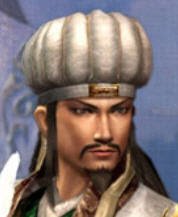
All work and no play makes Jack a dull boy. So, today’s post will be slightly more whimsical in nature. Most of you personally know me, so it will be no surprise to you that the good looking chap on the left hand side doesn’t resemble me even vaguely [sigh!].

So, who is he? Well, he’s one of the smartest blokes during a very chaotic time in China in the Romance of the Three Kingdoms. He’s known as the Sleeping Dragon or Zhuge Liang, the famed strategist to the Warlord Liu Bei of the Shu Kingdom. Even though I don’t even have 1% of his intellect, it does no harm to strive to try to emulate some of his strategies and wisdom in life.

The Romance of the Three Kingdoms is an interesting book set during a turbulent time in China which begins with the fall of the Han Dynasty. The part fiction, part historical novel describes the intrigue, wars, generals and strategists vying for power and covers a span of almost fifty years. During this time, the Han Dynasty disintegrated and China was split into many warring factions.

In the end, three major factions rose to power:


(a) Wei Kingdom led by Cao Cao

Cao Cao was a kickass charismatic bad dude that steamrolled over everybody. Fortunately, this dude was smart enough to recruit enough really muscular muscle man and braniacs to help him take over half the kingdom. He was on the verge of reuniting China but suffered a huge setback at the Battle of Red Cliff. The golden opportunity for him to reunite was lost. Cao Cao also recruited this really smart and savvy dude by the name of Sima Yi which gave his descendants a lot of grief in the end.


(b) Shu Kindom led by Liu Bei

Liu Bei was the charismatic sissy, who was lucky enough to be surrounded by brawny dudes such as Guan Yu and Zhang Fei. Over the years during his nomad journey, he managed to convince handsome chaps like Ma Chao & Zhao Yun and an old kickass dude like Huang Zhong to join him. He managed to also con master strategists to join him including Zhuge Liang and Pang Tong. Unfortunately, it was all for naught and his bumbling escapades allowed him to repeatedly snatch defeat from the jaws of victory.

(c) Wu Kingdom led by Sun Jian and Sun Quan
Sun Jian and Sun Quan were capable leaders that strengthened their hold over Southern China. As their territories were separated by a huge river, they manage to repel Cao Cao due to their superior naval armies and capable leaders. However, their succession policy sucked big time and their last Ruler capitulated to Wei without a fight after the fall of the Shu Kingdom.

To cut a long story short, in the end, all three of them got sh*ft*d by Sima Yi and his descendants. Sima Yi and company overthrew Cao Cao’s descendants and took over the Wei Kingdom. They, then subjugated the Shu Kingdom and Wu Kingdom in short succession and formed the Jin Dynasty.

In my next interlude, I’ll be looking at the stratagems used by the different factions during their struggle for power. The first stratagem is my favourite:

美人計 No Man May Pass the Hall of Beauties

By the way, I apologize if anyone of you tried to visit my blog during the weekends. It seems the kind people of Google thought my blog was a spam blog (aka splog) and deactivated my blog. Right now, it’s been activated again. Hopefully it stays this way and the problem doesn’t recur again!

  © Blogger template 'Minimalist G' by Ourblogtemplates.com 2008

Back to TOP