Wednesday, September 10, 2008

Financial Intelligence – Part XI

On Miserliness

Thus far, this series of posts on Financial Intelligence has extolled the virtues of being frugal. Yet, there must be a balance in all things and one must not be frugal to the point of being miserly.

In his book Buddhist Economics
, Ven. P. A. Payutto cautions against the dangers on being overly miserly. The information below is extracted from Chapter 4 of his book.

What are the Three Evils Associated with Wealth?
Obtaining wealth in immoral ways and using it to harmful ends are two evils associated with wealth. A third is hoarding wealth -- refusing to either share one's wealth or put it to good use.

Tale of A Scrooge

In this story, the Buddha recounts the evils of miserliness:

At one time, King Pasenadi of Kosala visited the Buddha. The King told the Buddha that a rich old miser had recently died leaving no heir to his huge fortune, and the King had gone to oversee the transfer of the miser's wealth into the kingdom's treasury.

King Pasenadi described the amount of wealth he had to haul away: eight million gold coins, not to mention the silver ones, which were innumerable. And, he said, when the old miser was alive he had lived on broken rice and vinegar, dressed in three coarse cloths sewn together, used a broken-down chariot for transport and shaded himself with a sunshade made of leaves.

The Buddha remarked:

Foolish Use of Wealth
‘That is how it is, Your Majesty. The foolish man, obtaining fine requisites, supports neither himself nor his dependents, his father and mother, wife and children, his servants and employees, his friends and associates, in comfort.

He does not make offerings, which are of great fruit, and which are conducive to mental well-being, happiness and heaven, to religious mendicants.

That wealth unconsumed and unused by him is confiscated by Kings, stolen by thieves, burnt by fire, swept aside by floods, or inherited by unfavored relatives.

His wealth, accumulated and not used, disappears to no purpose. His wealth is like a forest pool, clear, cool and fresh, with good approaches and shady setting, in a forest of ogres. No-one can drink, bathe in or make use of that water.

The evil person, obtaining wealth, neither uses it nor lets others use it, like a forest pool in a haunted forest -- the water cannot be drunk and nobody dares to use it.’

Wise Use of Wealth
‘As for the wise man, having obtained fine requisites, he supports himself, his mother and father, his wife and children, his servants and employees, and his friends and associates comfortably, sufficiently.

He makes offerings, which are of great fruit, and which are conducive to mental well-being, happiness and heaven, to religious mendicants.

The wealth that he has so rightly used is not confiscated by Kings, thieves cannot steal it, fire cannot burn it, floods cannot carry it away, unfavored relatives cannot appropriate it.

The wealth rightly used by him is put to use, it does not disappear in vain. His wealth is like a forest pool not far from a village or town, with cool, clear, fresh water, good approaches and shady setting. People can freely drink of that water, carry it away, bathe in it, or use it as they please.

The wise man, obtaining wealth, both uses it and puts it to use. Such a person is exemplary, he supports his relatives and is blameless. He attains to heaven.’

Conclusion
‘Your Majesty, those people who, having obtained vast wealth, are not intoxicated by it, are not led into heedlessness and reckless indulgence which endangers others, are very rare in this world.

Those who, having obtained much wealth, are intoxicated by it, led into heedlessness and reckless indulgence which endangers others, are truly of far greater number.’

Monday, September 8, 2008

Speed Reading – Part VIII

Analytical Reading: Classification Stage (Part 1 of 4)

We are currently at the Analytical Reading stage of Speed Reading. For a bird's eye view of Analytical Reading, please click here.


Understanding the Importance of Classification

You must know what kind of book you are reading. Preferably, before you start reading. There are different approaches required depending on the book you are reading. This is particularly important when you are reading nonfictional expository works.

What are nonfictional expository works?
An expository book is one that conveys primarily, ‘knowledge’. Any books that consist primarily of opinions, theories, hypotheses or speculation conveys knowledge and is classified as an expository work

Why do we need to classify these works?
It is important as each category is instructive in a particular way. For example, the problems dealt by a book on physics and one on morals are not the same. The methods an author may employ in solving a problem in physics will differ vastly from one attempting to answer moral dilemmas. As a skillful reader, your method in reading expository works must vary depending on the type of book you are reading.

What are the different categories of nonfictional expository works?
1. Practical Books;
2. Imaginative Literature;
3. Stories, Plays and Poems;
4. History;
5. Science and Mathematics;
6. Philosophy; and
7. Social Science.

How do I classify a book before reading?
Use inspectional reading to classify the book you are reading. This can be performed by reading:
1. The Title;
2. Subtitle;
3. Table of Contents;
4. Preface by the Author;
5. Index; and
6. Publisher’s Blurb.

For more information about Inspectional Reading, please refer to the following:
1. Inspectional Reading: Systematic Skimming
2. Inspectional Reading: Superficial Reading

Conclusion:
We have completed the Part 1 of 4 of the Classification Stage in Analytical Reading. Next, we will look at what we can learn from the Title of a Book. Any questions or comments?

Friday, September 5, 2008

Philosophical Musings - Part VII

The Roots of Wisdom

In the past, I used to rage over petty things. Yet, once the flame of anger subsides, I realize the foolishness of being embroiled over inconsequential things. For I know now, after reading the verse on Inconsequential Things, that life is a precious gift, not to be wasted by arguments and petty conflicts.

When you are overcome by anger, perhaps you too, should consider the following verse from the Roots of Wisdom?

Inconsequential Things


Within the light of the flint’s spark
They fight over ‘long’ and compete over ‘short’
Yet how much time can there be?


Above the horns of the tiny snail
They compare their losses and argue about gains
Yet how big can the world be?

Wednesday, September 3, 2008

Financial Intelligence – Part X

Balanced Livelihood

Today, the Guru instructing us on Financial Intelligence will be none other than Lord Buddha. It may be useful to listen to the Vyagghapajja Sutta, where Lord Buddha instructs rich householders how to preserve and increase their prosperity and how to avoid loss of wealth.

In a town named Kakkarapatta, Vyagghapajja had approached Lord Buddha to requested advice on how maintain a balanced livelihood. Lord Buddha replied thus:

What is Balanced Livelihood?
A householder knowing his income and expenses leads a balanced life, neither extravagant nor miserly, knowing that thus his income will stand in excess of his expenses, but not his expenses in excess of his income.

Just as the goldsmith or an apprentice of his, knows, on holding up a balance, that by so much it has dipped down, by so much it has tilted up; even so a householder, knowing his income and expenses leads a balanced life, neither extravagant nor miserly, knowing that thus his income will stand in excess of his expenses, but not his expenses in excess of his income.

If a householder with little income were to lead an extravagant life, there would be those who say:

'This person enjoys his property like one who eats apples obtained by shaking the apple tree. Many fruits fall from the apple tree, only a few are eaten whilst a large number are wasted.'

If a householder with a large income were to lead a wretched life, there would be those who say:

'This person will die like a starveling.'

Four Sources of Wealth Destruction
The wealth thus amassed has four sources of destruction:
(i) Debauchery,
(ii) Drunkenness,
(iii) Gambling,
(iv) Friendship, companionship and intimacy with evil-doers.

Just as in the case of a great tank with four inlets and outlets, if a man should close the inlets and open the outlets and there should be no adequate rainfall, decrease of water is to be expected in that tank, and not an increase; even so there are four sources for the destruction of amassed wealth — debauchery, drunkenness, gambling, and friendship, companionship and intimacy with evil-doers.

Four Sources of Wealth Creation
There are four sources for the increase of amassed wealth:
(i) Abstinence from debauchery,
(ii) Abstinence from drunkenness,
(iii) Non-indulgence in gambling,
(iv) Friendship, companionship and intimacy with the good.


Just as in the case of a great tank with four inlets and four outlets, if a person were to open the inlets and close the outlets, and there should also be adequate rainfall, an increase in water is certainly to be expected in that tank and not a decrease, even so these four conditions are the sources of increase of amassed wealth.

Conclusion:
It would be useful to reflect and benefit from Lord Buddha’s wisdom on maintaining a Balanced Livelihood, free from the worries of poverty and debt. Any questions or comments?

Monday, September 1, 2008

The Way of the General - Part IX

Instruction and Direction

A policy of instruction and direction means those above educate those below, not saying anything that is unlawful and not doing anything that is immoral, for what is done by those above is observed by those below.

To indulge oneself yet instruct others is contrary to proper government; to correct oneself and then teach others is in accord with proper government. Therefore true leaders first rectify themselves and only after that do they promulgate their directives. If they are not upright themselves, their directives will not be followed, resulting in disorder.

Therefore the Way of leadership puts education and direction before punishment. To send people to war without education is tantamount to throwing them away.


Application:
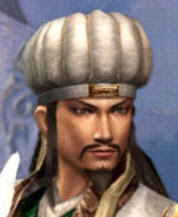
The Imperial Prime Minister of Han, Cao Cao was one of the greatest men of his time. He managed to wrest control over all of Northern China against all odds. It was not by accident, that he commanded the respect and obedience of his army and the populace in general. The following incident illustrates his qualities as a leader.

Be You Ever So High, The Law is Above You
It was the year AD198. With the Han Empire in its’ dying throes, rebellious warlords rose like serpents daring to strike at the Imperial Throne. One such rebel was Zhang Xiu.

The Imperial Prime Minister, Cao Cao himself, led an army to crush the rebellion. It was summer and as his army passed through a wheat region, and the grain was ready for harvesting but the peasants had fled for fear, and the corn was uncut.

Cao Cao sent proclamations to all villages and towns:

‘I am sent on the expedition by command of the Emperor to capture a rebel and save the people. I cannot avoid moving in the harvest season; but if anyone trample down the corn, he shall be put to death. Military law is strict without exception, and the people need fear no damage.’

The people were very pleased and lined the road, wishing success to the expedition. When the soldiers passed wheat fields, they dismounted and pushed aside the stalks so that none were trampled down.

One day, when Cao Cao was riding through the fields, a dove suddenly got up, startling the horse so that it swerved into the standing grain, and a large patch was trampled down. Cao Cao at once called the Provost Marshal and bade him decree the sentence for the crime of trampling down corn.

‘How can I deal with your crime?’ asked the Provost Marshal.

‘I made the rule, and I have broken it. Can I otherwise satisfy public opinion?’

Cao Cao laid hold of the sword by his side and made to take his own life. All hastened to prevent him.

Guo Jia said, ‘In ancient days, the days of the Spring and Autumn history, the laws were not applied to those of the most important. You are the supreme leader of a mighty army and must not wound yourself.’

Cao Cao pondered for a long time. At last he said, ‘Since there exists the reason just quoted, I may perhaps escape the death penalty.’

Then with his sword he cut off his hair and threw it on the ground, saying, ‘I cut off the hair as touching the head.’

Then he sent messengers to exhibit the hair throughout the whole army, saying, ‘The Prime Minister, having trodden down some corn, ought to have lost his head by the terms of the order; now here is his hair cut off as an attack on the head.’

This deed was a stimulus to discipline all through the army so that not a person dared be disobedient.

Conclusion:
It is only through actions alone that a leader can seek to inspire his followers. Leaders of low morals often practice the proverb ‘Do as I say, not as I do!’ If they do not walk the talk, why then should they be surprised if their followers rebel against their leadership?

  © Blogger template 'Minimalist G' by Ourblogtemplates.com 2008

Back to TOP